Bridebook Design Principles
Created design principles that translated our product vision into clear, actionable guidance, empowering teams to consistently deliver a strong and unified product experience.

Overview
There was a lack of product consistency and clear guidance across Bridebook’s product ecosystem. While brand guidelines existed, they did not articulate a shared vision for what the team was working towards or how the product should make users feel. These principles were created collaboratively with cross-functional teams to establish alignment, inspire motivation, and support the mission of creating the best wedding planning experience for couples around the world.
Role
Head of Design
Duration
2 months
The initial challenges
When I joined Bridebook, it was clear there was a lack of a cohesive identity guiding the product experience. While the company had a defined mission and brand guidelines, there was nothing that translated these into a practical framework for designing and building the product itself.
Summary
-
No shared understanding of the target product experience across design and product
-
Customer problems were not clearly defined or widely understood
-
The company mission lacked clear translation into product decisions
-
Design feedback was becoming inconsistent, unstructured, and subjective
Where we started
To begin with I wanted to review our company mission and our brand guidelines to see how different parts of the Bridebook ecosystem were communicated today. This initial audit allowed an opportunity to further deep dive into the importance of bridging the gap between strategy and practical application to the product experience.


Aligning with our strategy
It was important to define how these experience principles would be used in practice, and how they worked alongside existing design guidelines and company strategy. Making these relationships explicit to the wider business helped ensure everything worked together to deliver a cohesive experience at every touchpoint.


Colloboration & Workshops
We wanted a versatile illustration approach that would allow us to continue to create custom illustrations with a set of principles. These characters represent our story, every is made up of different shapes, sizes and we all have different personalities. Whilst still keeping our playful trait this approach worked successfully.


Workshop content overview

Finalising the principles
After several rounds of workshops and feedback from the teams across the business and working closely with the leadership team to gain their input. The final principles were refined and we had four core principles that covered the Bridebook experience we wanted to embody.


Final principles


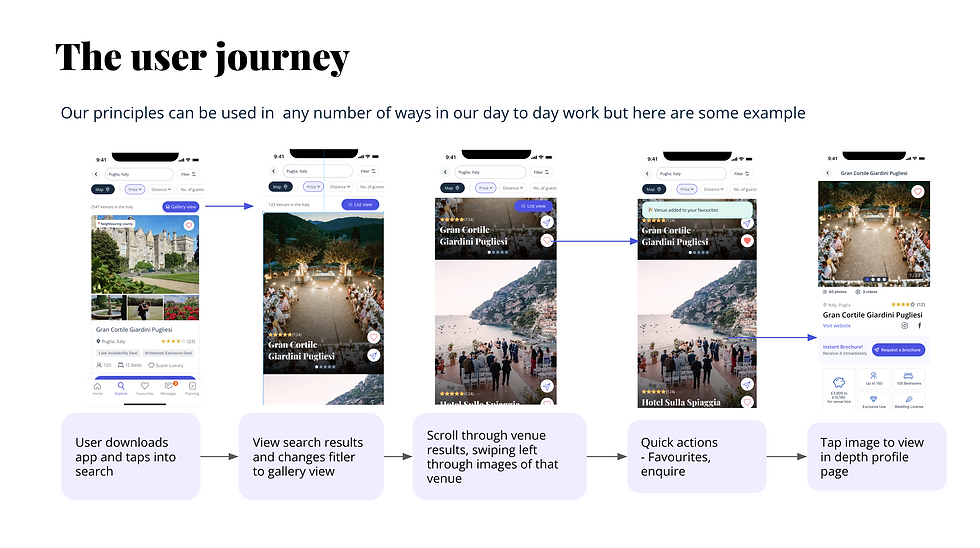
Principles in action (Case study)
Applying these principles to a project shows how they can be use practically to help elevate the user experience.



The outcome so far
Cross functional awareness
Our design principles are now understood not just by design and product, but company-wide, from engineering to marketing, guiding project work across Bridebook. An annual survey showed 86% of employees understood and felt motivated by these principles.
Shared language for design critique
Initially, design feedback was too subjective, making it hard to coach colleagues. Establishing clear principles provided a foundation for structured critique, guiding feedback around improving the user experience. This reduced subjectivity and made designers’ jobs easier.
Going the extra mile in UI
Our “Sparking Delight” principle shapes UI and motion improvements across the product, ensuring each sprint includes features that delight users. This approach has contributed to a CSAT rise from 62% to 73% over three months.